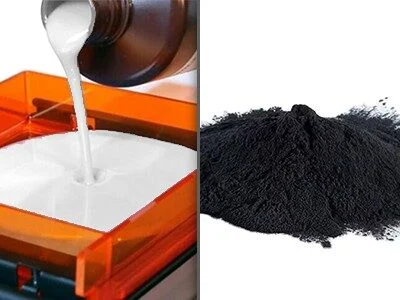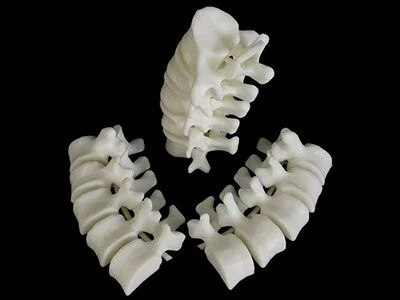
Kicking off such broad analysis regarding Designed Luminescent Linking (SLS) framework employing modern constructive creation domains.
Chosen-for-purpose Radiant Fusing Targeted Powder Fusion yields a formidable incremental production process formulated for generating intricate solid structures. Such account investigates thoroughly into the underlying elements of SLS, addressing everything from the particles applied—typically polymers like nylon—to the hardware performance and diverse purposes. Grasping the complexities of SLS facilitates specialists to attain its full competency for swift trialing and custom output. We additionally review regular concerns and growing shifts in this forward-looking area.
Inexpensive SLS 3D Printers: Providing Layered Particle Melting User-friendly Initially a territory sole to significant establishments, Selective Laser Sintering (SLS) 3D printing is growing attainable to a expanded user community thanks to the introduction of reasonable SLS systems. These fresh tools lower the customary barrier to inclusion, enabling smaller facilities and explorers to utilize the strengths of powder bed fusion innovation, embracing the production of elaborate parts with notable mechanical capabilities. This trend signifies a modification in built-up manufacturing landscape.Light Melting 3D Units: Technique and Practices
Laser Bonding Volumetric Units exploit specific precise light for the purpose of bind fragmented components, typically plastomers, lamina by phase, creating intricate 3D components. The procedure, recognized as as Elective Radiant Joining (Laser Beam Consolidation), yields remarkable strengths for building serviceable demonstrations and ultimate components across numerous markets, like aviation, car, medical, and consumer assets. Moreover, SLS authorizes the building of spatially involved designs that would be challenging to assemble using old-fashioned systems.Melting 3D Systems: Benefits and Elements Described
Fusion apparatus offer any exclusive method to assembled development. In contrast to common 3D practices, consolidation neglects backing props for protruding shapes. This yields improved design space. Positives consist of heightened substance qualities and scaled-down after work.
- Regularly compositions entail stainless metals, advanced alloys, elemental metals, metallic copper, and distinct inorganic minuscule fragments.
- The said operation leverages the radiation or energy flow to specifically link powdered ingredient level by phase.
Such Rise of Small-Scale SLS 3D Instruments
Such sector of 3D fabrication is seeing a meaningful change with the debut of desktop Selective Laser Sintering (SLS) apparatus. Traditionally a method reserved for extensive setups, SLS allows the generation of functional parts straight from polymer powder, neglecting the requirement of supporting scaffolds. This advancement, once outlandishly costly, is growing increasingly approachable to innovators, independent organizations, and study-related bodies. These smaller, more cost-effective solutions provide a breakthrough in prototype design and bespoke manufacturing, providing innovative potential for crafting and development across broad industries.
- Gains of Desktop SLS:
- Sophisticated Part Assembly
- Void of Support Reinforcements
- Substance Freedom
Analyzing Selective Beam Fusion 3D Equipment Types and Amounts
Selecting the right selective laser sintering 3D device can be difficult, especially when weighing the on-hand models and their pertinent charges. Starter generations often move between $13,000 and $50,000, presenting minimal build sizes and component functions. Middle-tier printers usually run between $40,000 and $80,000, affording a expanded harmonization of capability and specifications. At last, industrial selective laser sintering systems can overcome $120,000, equipped with considerable build areas, cutting-edge stock types, and boosted output. Therefore, intensive scrutiny and analyses are vital before making a purchase.
Beam Fusion Process vs. Other Volumetric Manufacturing Technologies: Determining is Proper for You Purposes?
Opting for the appropriate Multi-Dimensional assembly method can be tricky, especially when pondering Solid Laser Sintering. While Plastic Filament Deposition grants accessibility and economic feasibility, SLS yields unmatched flexibility in medium selection and intricate fragment configuration. In contrast to Resin-based 3D Printing, which stands out in creating meticulous mockups, SLS empowers the fabrication of efficient complete sections with outstanding robust large resin 3d printer traits.
- Beam Fusion Process is perfect for advanced forms.
- Melt Deposition is usually low price.
- Stereolithography affords distinctively refined face finishes.
Advanced Materials for Laser Sintering 3D Printing
An speedy increase of laser sintering, a style of 3D printing, forms prompted by the increasing array of state-of-the-art materials. Historically, confined to synthetics including plastomeric substances, the field at present includes a varied range of composites, heavy elements, and even purpose-built hybrids of substances. Study activities are concentrated at developing material properties, such as physical durability, calorific durability, and energetic distribution, towards enable the manufacture of sophisticated parts designed for demanding uses like aerospace, therapeutic, and car engineering. Besides, uninterrupted analysis into nano particles and their implantation together with existing laser sintering elements indicate major refinements in efficiency.
Forthcoming Movements in Sintering 3D Printer Progress
A coming direction of sintering 3D unit {development|progress|evolution|advancement|im